
BIOREGIONAL PORTFOLIO
THE CARIBBEAN
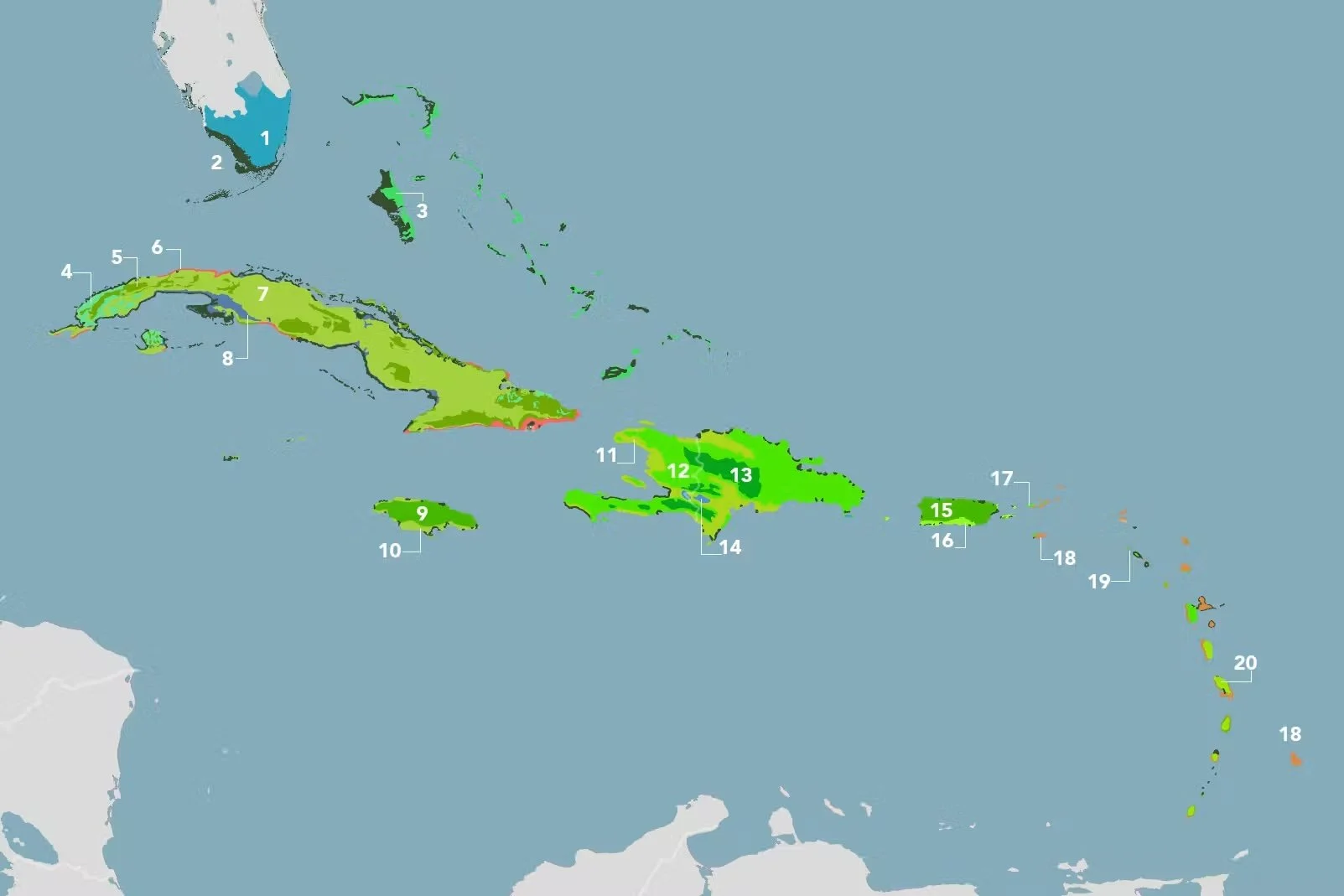
Source: One Earthbioregion classifications
Bioregion classification: Caribbean Islands (NT26), with our Belize-based work sitting within the neighboring Yucatán & Veracruz Mixed Forests bioregion (NT27) — reflecting how bioregional boundaries follow ecology rather than national borders.

WHY THE CARIBBEAN?
The Caribbean is one of the most biologically diverse marine regions on the planet. It is home to roughly 10% of the world's coral reefs, 12 to 26% of its mangrove forests, and 18% of its seagrass beds, habitats that together support over 12,000 marine species.² Over half the region's plant life is found nowhere else on Earth, and in the last 500 years, most of the world's plant and animal extinctions have occurred on islands.³
Forty million people across the Caribbean depend on marine activity, including fishing and marine tourism, for their livelihoods.⁴ The region carries a disproportionate share of climate impact while contributing less than 1% of global greenhouse gas emissions. Despite this, ocean conservation receives well under 1% of global philanthropic giving, leaving the Caribbean chronically underinvested relative to its ecological importance.⁵ The organizations doing the most critical work here have been consistently overlooked by traditional philanthropy. WELL/BEINGS works to close this gap.
WHERE OUR PROJECTS ARE:
PUERTO RICO ᐧ BRITISH VIRGIN ISLANDS ᐧ DOMINICAN REPUBLIC ᐧ FLORIDA ᐧ BELIZE
A HOLISTIC,
integrated PORTFOLIO
41
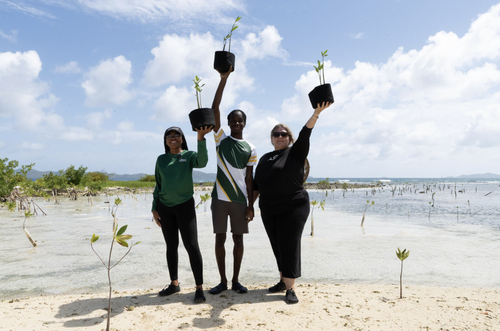
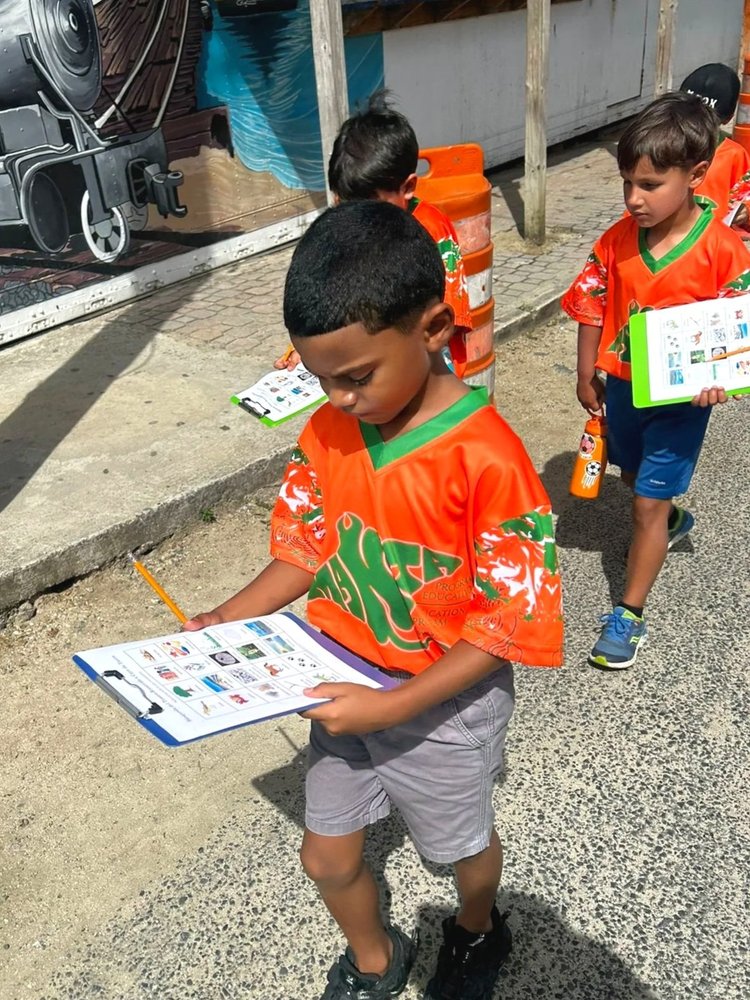
PROJECTS FUNDED SINCE 2021 Since 2021, we have funded 41 projects across this bioregion, including active pipeline commitments through 2028, working toward integrated, compounding impact. We believe lasting change requires solutions that integrate human systems, education, wellbeing, and livelihoods, with natural systems, ecosystems and wildlife. Our Caribbean portfolio reflects that across three connected areas, explore each below.
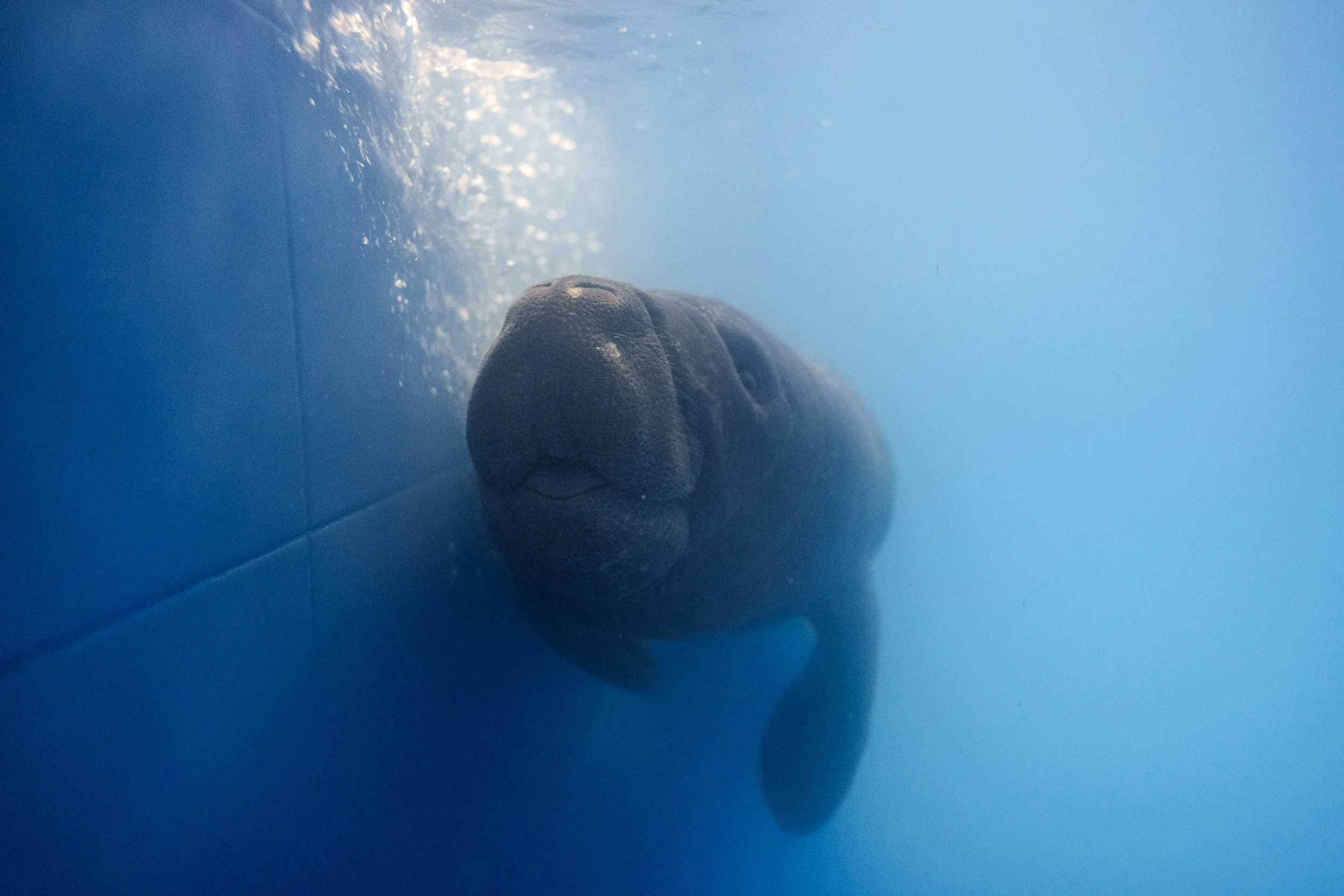
MEET THE MANATEE
JEAN PEDRO,
a living indicator of
COASTAL HEALTH
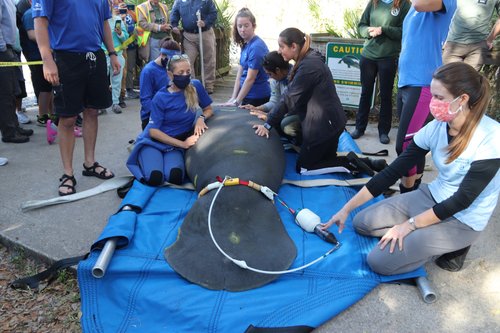
The Greater Caribbean manatee is a living indicator of coastal ecosystem health, relying on healthy seagrass beds and mangrove-lined waterways to survive. As mangroves disappear, so does their habitat, making this critically endangered species one of the most vulnerable casualties of coastal degradation.
Jean Pedro, a juvenile manatee rescued and rehabilitated by our partners in the DR, is set for release back into the wild this year. His movements, habitat use, and adaptation will be monitored post-release, generating critical data to improve rehabilitation outcomes and long-term conservation strategies for the species.
By protecting and restoring mangroves and seagrass, we protect the entire web of life they support, manatees included.
The Bioregional Hub
Launching summer 2026, the Bioregional Hub is a direct response to what partners told us they needed most: more connection, more collaboration, and more ways to learn from each other. It brings together the organizations we support across the Caribbean to share knowledge, align strategies, and amplify collective impact, ensuring the work happening across these islands is connected, not isolated.
HELP US PROTECT THE COASTS that protect us.
Video By Eliú Parrilla Sánchez, The Vieques Conservation and Historical Trust
Sources
One Earth, bioregion classifications
Ocean Wealth, The Nature Conservancy, 2023
Seacology, 2026
Das et al., "Mangroves in the Anthropocene: A Global Synthesis of Carbon Storage, Biodiversity, and Coastal Resilience under Climate and Anthropogenic Stressors," Science of the Total Environment 1015 (2026)